
Brief description of the monument
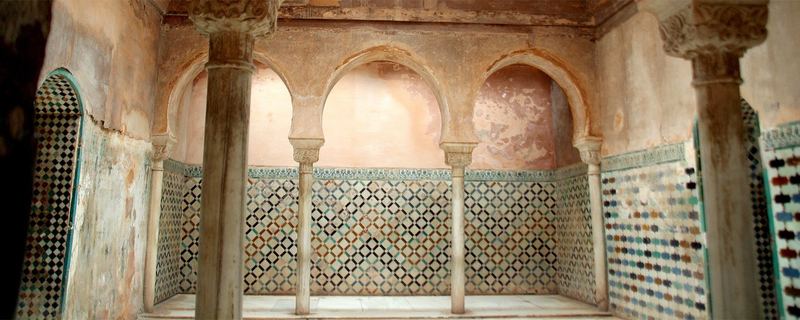
The Baths of the Alhambra follow the model of Roman baths. They are divided into several rooms: first the Hall of the Beds, used for undressing before bathing, then the cold room, the warm room and finally the steam room. The rooms are very simple, with little decoration on the walls, marble floors and vaults with star-shaped skylights.
History of the monument
They were built to the east of the Comares Palace, following the model of Roman baths. The Hall of the Beds, the first room on entering the baths, was the "apodyterium" used for undressing before bathing. It has a square central space bounded by columns, with a fountain and galleries around it, and an opening to the upper floor. It is said that the king looked down from that gallery at his women bathing and then threw an apple to the one he had chosen to spend the night with. On either side there are beds with coloured tiling for resting after the bath. All the existing decoration dates from Christian times, as the poor condition of the baths over the centuries led to several restorations and reconstructions.
On the upper floor there is a small room with a Mudejar interlaced wooden ceiling, and its arches have inscriptions and decoration from the mid-15th century.
The other rooms are very simple, with no decoration on the walls, marble floors, plain tiled dados, undecorated horseshoe arches and vaults with star-shaped skylights, once closed with coloured glass, which lit the rooms.
The next room is the "frigidarium" or cold room where, unlike in Roman baths, the pool is replaced by a basin of cold water. The central room is the "tepidarium" or warm room, which connects with the others through segmental arches, and next comes the "caldarium" or steam room, the hot room of the bath. A copper boiler heated the water, which was carried through underground passages to heat these rooms. In a tiled niche at the end of the room you can still see the spout from which the hot water flowed. From here bathers went back the other way to the "apodyterium", enjoying a very pleasant gradation of temperatures. This layout is not unique to the Alhambra baths: it was common to all Arab baths.