
Brief description of the monument
Intending to live in Granada while his palace was being built, Charles V ordered a series of rooms to be adapted and built in the Castilian way of life: although the Emperor and his court were captivated by the beauty of the Nasrid palace, they found its architecture far from comfortable. These rooms, built between 1527 and 1537 around the Daraxa Garden, were never actually occupied by the Emperor.
History of the monument
They were also decorated by Julio de Aquiles and Alexander Mayner. Their paintings were covered over in 1729 for the visit of Philip V, but were recovered in the 19th and 20th centuries: the Fruit Room, the Empress's Rooms and the Emperor's Rooms. These paintings were restored again by Víctor Medina Flórez and Ana García Bueno in the 1990s.
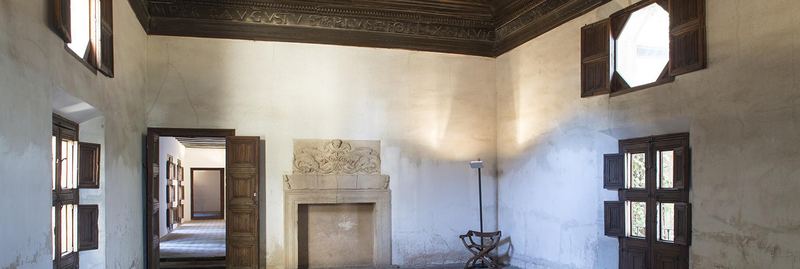
They are also known as the Washington Irving Rooms, because the American writer lived in them in 1829 during his stay in Granada. He probably wrote his famous "Tales of the Alhambra" here. The first room has a fireplace with the imperial emblems and a coffered ceiling, which is even more splendid in the second room. The ceilings and fireplaces are thought to be the work of Pedro Machuca. The other two rooms, called the Fruit Rooms because of their decoration, are smaller and also include the motto "Plus oultre" in their decoration.
The Queen's Dressing Room (Peinador de la Reina) gallery is reached from these rooms. It was also built in the 16th century, on top of the wall walk, and was restored in 1842 following the original work.